

Ever wondered if machines might outsmart us on the production line? Industry 4.0 mixes smart tools, robots, and rapid data sharing (that means switching info quickly) to change how factories work.
This tech boost lets teams react fast and work together smoothly, like players nailing the perfect move. It connects every step of manufacturing to create safer and quicker processes.
In short, these innovations turn old-fashioned factories into digital powerhouses that drive both efficiency and new ideas.
Overview of Industry 4.0 Technologies Empowering Digital Transformation

Industry 4.0 is the start of a new age in manufacturing where digital tools play a big role. It mixes smart tech like the Internet of Things (IoT, which lets devices talk to each other), Artificial Intelligence (AI, or computers that learn and make decisions), robotics, augmented and virtual reality (AR/VR, which create digital experiences), and private 5G (a fast, secure way to move data). Think of it like a well-coordinated sports team passing the ball smoothly to score a goal.
These technologies work by gathering real-time data from machines and production lines. This means people can make quick, informed choices because everything is connected and updated every moment. Instead of working in separate pockets, every part of the production process now works together in a flexible, automated way, making factories smarter and more efficient.
At its heart, digital transformation is about linking computer systems (IT) with real-world production. Imagine it like connecting your phone to a home security system; small sensors warn you early about any issues. Companies using this approach see better efficiency because they turn raw data into simple actions. This smart mix of digital tools with traditional methods is carving a safe and high-performance path to the future of manufacturing.
Industry 4.0 IoT Integration and Smart Sensor Technologies in Connected Production Systems
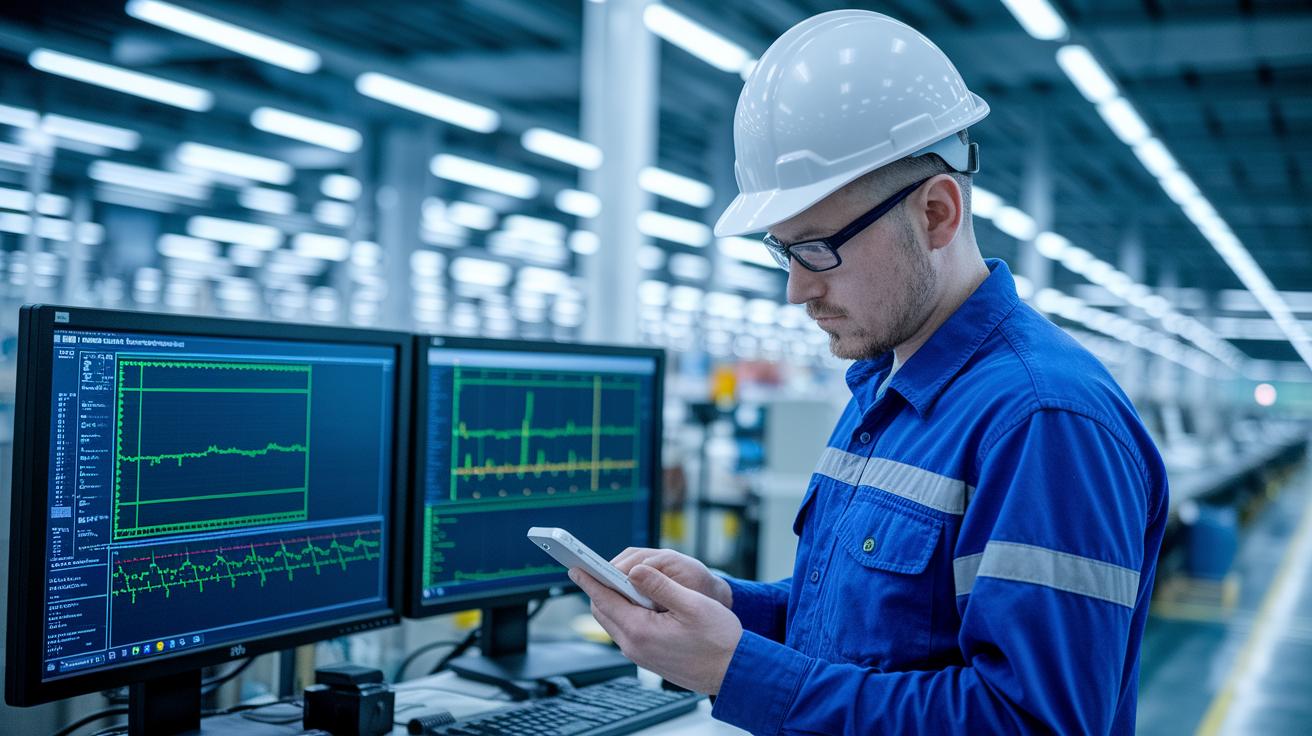
Industry 4.0 connects devices, machines, and sensors that automatically share data on the production floor. This system sends up-to-the-minute info into smart platforms that help keep track of processes and support quick decisions. Imagine a network of wireless sensors capturing important details like temperature, vibration, and flow, then combining all that data to show you exactly how your production is doing. And thanks to smooth machine-to-machine chats, using tools like MQTT (a handy way for devices to talk) over private 5G or Ethernet, the operational and IT sides work together seamlessly. Ever wonder how hundreds of sensors along a production line can even predict when tools need a tune-up?
IoT Architecture
Here’s how it breaks down: First, the device layer gathers raw data. Next, an edge gateway works on that data right at the source before sending it off. Finally, a cloud layer stores and analyzes everything. Protocols like MQTT and OPC UA (a secure language for devices) ensure that every part of the system communicates efficiently and safely.
Smart Sensor Networks
These networks use tiny MEMS sensors and wireless mesh designs to keep things connected. They mix sensor readings together so problems can be spotted early on. This proactive approach helps detect any unusual patterns fast, keeping production running smoothly with less downtime and fewer expensive disruptions.
Industry 4.0 Advanced Data Analytics and Industrial AI Solutions for Predictive Maintenance

Industry 4.0 turns raw sensor numbers into clear insights that keep machines running smoothly. It uses smart data crunching so that, much like a car telling you it needs a tune-up before trouble strikes, potential issues are spotted days, even weeks, ahead. Predictive maintenance, powered by AI models trained on data such as vibration and temperature (think of it as learning what “normal” looks like), makes sure production isn’t caught off guard.
Big data steps in by quickly processing streams from sensors all over a production line. Take Audi, for instance. They gather massive amounts of production data every day. Their dashboards then pick up on odd patterns in real time, giving plant managers a heads-up to tackle problems before they grow. This forward-thinking method bumped up equipment uptime by 15% and reduced waste by 10%.
Industrial AI also plays its part by detecting anomalies as they happen and then diving in to figure out the root cause. So when something seems off, it’s not just waved off, it gets thoroughly checked, and plant workers receive simple, clear insights about key machine health metrics and performance numbers. It’s like getting a friendly alert with all the details you need.
This smart mix of predictive analytics and industrial AI means manufacturers can plan maintenance smartly and dodge unexpected downtime. It’s almost like having a helpful digital assistant that keeps everything humming along at peak performance.
Industry 4.0 Robotics Integration and Collaborative Robotics in Smart Manufacturing

Modern factories no longer see robots as lonely machines; they now work side-by-side with people. In these smart workspaces, mobile robots like AGVs (automated guided vehicles, which follow set paths) and AMRs (autonomous mobile robots, which move on their own) help transport materials. Often, these robots harness Gen AI (advanced artificial intelligence) to find the best routes and manage their group movements, making sure parts and tools reach their spots quickly. For example, Tonasco upped its production speed by 20% by adding robotic arms that perform precise welding and handle materials. This kind of integration even extends to automating everyday tasks such as packaging and sorting, keeping production lines smooth and fast.
Collaborative Robotics Use Cases
Cobots team up with workers for tasks like assembling small batches, caring for machines, and picking and placing items. They come with built-in force-torque sensors (devices that measure how much force is applied) to help them check quality and handle delicate tasks. This friendly mix of smart automation and human oversight creates a safer workspace and makes production more adaptable.
Human-Robot Collaboration
Safety is crucial when people and robots share the same area. Factories use sensors that detect collisions and monitor speed and safe distances to protect everyone. Plus, workers go through hands-on training with these systems, building a smooth, secure partnership that really boosts overall manufacturing performance.
Digital Twin Applications and Virtual Simulation Environments in Industry 4.0

Digital twin applications are reshaping manufacturing by creating live, digital copies (virtual look-alikes) of real-world assets. Engineers and operators love these digital replicas, they make it easy to track building progress, balance production lines, and plan maintenance without the usual hassle.
For instance, companies mix digital twin simulations with CAM software (tools that help with machine tasks) and ERP data (information about business operations) to set up efficient tool paths and production schedules. This smart, simulation-based method lets teams try out design tweaks and spot potential issues before they turn into real problems.
Virtual simulation environments also speed up the commissioning process. By testing PLC code (the set of instructions for machines) in a simulated setting, virtual commissioning can cut startup time by up to 30%, helping operations ramp up faster and avoid expensive delays.
Plus, simulation-based training offers operators an immersive learning experience with VR headsets. This hands-on approach ensures they become familiar with new equipment and safety protocols in a completely risk-free space.
Digital factory simulation creates a dynamic platform where designs are validated and multiple scenarios are tested. This gives manufacturers the confidence to adjust production strategies on the fly, paving the way for a more agile, efficient, and secure industrial future.
In the end, digital twin applications and virtual simulation environments drive revolutionary changes in manufacturing by effectively bridging the gap between digital planning and actual production.
Industry 4.0 Cloud Manufacturing, Edge Computing, and High-Speed Connectivity for Scalable Production

Industry 4.0 is all about blending cutting-edge cloud manufacturing with local edge computing and lightning-fast connectivity to create production systems that can easily scale up and stay resilient. Companies now rely on private or mixed cloud setups to run core systems like ERP and MES along with smart analytics tools. This means every part of the manufacturing process gets instant access to key data without bogging down in-house teams, as trusted service providers manage the ongoing maintenance and updates.
Edge computing stations, set up very close to where data is actually needed, handle the critical control loops right on the spot. With response times of less than 10 ms, these local nodes help manufacturers make quick decisions that keep their production lines both safe and smooth. The magic happens when these edge devices work seamlessly with centralized cloud platforms, merging real-time local processing with broader analytical insights. Many companies even use integrated systems that ensure the edge and cloud layers communicate perfectly.
A great example of this smart setup is Pegatron’s 5G smart factory in Vietnam. Utilizing a private 5G network as a backbone, they support AR-assisted maintenance and real-time checks on quality, all on the fly. This high-speed network not only improves device-to-device chatter, but it also strengthens the system’s ability to scale, making production more agile and robust when demands spike.
Real-World Case Studies of Industry 4.0 Implementations Across Sectors

In smart manufacturing, companies are using new digital tools to drive innovation. Take the auto industry, for example. Audi gathers and studies production data from connected devices, which has helped lift quality by 12%. It’s a neat reminder that even small data insights can make work run more smoothly.
Over in electronics, Pegatron has set up a cool 5G-enabled factory. They automate quality checks and use augmented reality (tech that blends digital info with the real world) to guide tasks. This smart system keeps production on track and ensures every device is top-notch. It shows how fast, steady communication can really change a factory’s flow.
The metals industry is also in the game. Tonasco brings together smart sensors, AI (artificial intelligence that predicts problems), robotics, digital twins (virtual copies of real systems), and other digital tools all in one go. This mix helps cut downtime and boosts the precision of production, proving that combining digital tech can lead to great results.
Even farming is getting a digital makeover. Precision farming now taps into drones, cloud computing (using the internet to store and process data), and IoT sensors to check on irrigation and pest control. This approach not only makes managing crops easier but can even raise yields by as much as 20%. It’s a fresh take on farming that makes use of smart data to work better and faster.
| Industry | Company | Key Technology | Primary Benefit |
|---|---|---|---|
| Automotive | Audi | IIoT data analytics | 12% quality improvement |
| Electronics | Pegatron | 5G connectivity, AR-guided automation | Smooth, automated quality assurance |
| Metals | Tonasco | IIoT sensors, AI predictive maintenance, robotics, digital twins, CAM, ERP | Precision manufacturing and reduced downtime |
| Agriculture | Precision Farming | Drones, cloud computing, IoT sensors | Up to 20% yield boost |
Challenges, Cybersecurity, and Best Practices in Industry 4.0 Adoption

Manufacturing companies are now connecting cloud systems with their operational tech networks every day. This link helps them work faster and smoother, but it also brings along some risks. For example, weak spots in industrial control systems (the tech that handles factory operations) can sometimes stop production. And then you’ve got worries about data privacy, limits on resources, and whether teams are ready for the change. One solution is using cloud-based enterprise resource planning systems, which let experts handle maintenance and upgrades so companies don’t have to.
Balancing efficient automation with strong cybersecurity is super important. Manufacturers need to bridge the gap between everyday operations and IT to make sure that vital production systems stay safe while running at peak performance. By following smart, step-by-step practices, they’re better prepared to tackle any issues head-on.
- Lock down OT/IT connections
- Adopt zero-trust setups (a method where nothing is trusted automatically)
- Regularly check for vulnerabilities and apply patches
- Invest in staff training and change-management support
- Team up with managed security service providers
Focusing on these straightforward, step-by-step measures makes it easier to keep digital production safe. By addressing challenges early, manufacturers can ensure that their journey toward digital transformation stays both secure and reliable, building a production environment that’s ready for whatever the future brings.
Future Trends and Next-Generation Control Systems in Industry 4.0 Evolution

Industry 4.0 is evolving fast with new tech that takes smart manufacturing to exciting places. Right now, smart software like generative AI (think of it as a clever helper that learns and improves processes) is fine-tuning production without missing a beat. And with AR/VR (those cool gadgets that let you see and fix things remotely), teams can even solve problems from far away, as if you could repair a machine using a headset while relaxing in another city. Plus, private 5G networks provide a super-fast, smooth connection that makes all these high-tech moves reliable.
Take Great Wall Motor’s smart plant in Thailand, for example. It shows how modular production (flexible building blocks that change as needed) and adaptive control systems are setting the pace for future factories. This plant can easily adjust to new production needs, helping create operations that are quick on their feet. Looking ahead, many makers are now also focusing on being green. With smart energy management and digital quality checks, these factories work hard to save energy while keeping up with innovation. For more on next-generation tech, check out nextgen technologies.
Final Words
In the action scene, the blog showed how digital transformation reshapes production with industry 4.0 technologies, including IoT integration, smart sensor networks, advanced data analytics, collaborative robotics, digital twin simulations, and secure cloud-edge systems.
We saw clear examples of how connected production boosts efficiency and maintains cybersecurity. Real-world case studies and future trends further underline the transformative power of these innovations.
Embrace these smart solutions to drive a dynamic digital future.
FAQ
What are some Industry 4.0 examples?
The phrase “Industry 4.0 examples” refers to real-world applications like IoT sensors, data analytics, collaborative robotics, digital twin simulations, and cloud platforms used to boost production efficiency and reduce downtime.
What does an Industry 4.0 technologies PPT typically include?
The phrase “Industry 4.0 technologies PPT” generally means a slide presentation that explains digital tools such as IoT, AI, robotics, and cloud systems, highlighting their roles in transforming manufacturing processes.
What is meant by an Industry 4.0 technologies PDF?
The phrase “Industry 4.0 technologies PDF” indicates a downloadable document that outlines the key digital innovations—like IoT, robotics, and data analytics—driving modern manufacturing and operational insights.
What are Industry 5.0 technologies?
The phrase “Industry 5.0 technologies” refers to next-generation solutions that emphasize human–robot collaboration and sustainable production, building on Industry 4.0 advancements while adding creative and personalized elements.
What does Industry 4.0 in manufacturing involve?
The phrase “Industry 4.0 in manufacturing” involves integrating digital technologies such as smart sensors, advanced analytics, and robotics to streamline production processes and enhance overall operational performance.
What are the Industry 4.0 pillars?
The term “Industry 4.0 pillars” identifies core components like IoT connectivity, AI-driven data analytics, robotics integration, digital twin simulations, and high-speed networks that support smart manufacturing systems.
What is referred to by Industry 4.0 technologies Quizlet?
The phrase “Industry 4.0 technologies Quizlet” points to study sets or flashcards designed to help students and professionals learn about essential digital concepts, including IoT, data analytics, and robotics in manufacturing.
When did Industry 4.0 start?
The phrase “When did Industry 4.0 start” typically points to the early 2010s, when advanced digital tools like IoT and AI began integrating into manufacturing, marking the beginning of the fourth industrial revolution.
What are the technologies behind the 4th Industrial Revolution?
The phrase “technologies behind the 4th Industrial Revolution” covers digital innovations such as IoT, AI, robotics, cloud computing, and big data analytics that collectively drive modern automation and production improvements.
Is AI considered an Industry 4.0 technology?
The phrase “Is AI an Industry 4.0 technology” confirms that AI is key; it powers predictive maintenance, real-time analytics, and smart manufacturing, fundamentally enhancing production efficiency and decision-making.
What distinguishes Industry 4.0 from earlier industrial revolutions?
The phrase “What distinguishes Industry 4.0” highlights that unlike the steam, electrification, or digital revolutions, Industry 4.0 integrates advanced tech like IoT, big data, and robotics, creating fully connected and adaptive production systems.
How does the Information Age relate to modern industry?
The phrase “How does the Information Age relate” shows that this era enabled widespread access to digital information and connectivity, laying the groundwork for innovative manufacturing practices and the transformative technologies of Industry 4.0.