

Ever wonder if your car really looks out for you? Imagine riding along with smart cameras, radar (a way to spot things using invisible waves), and sensors working together like a trusty co-pilot. It lets you know when trouble might be headed your way and even steps in to help with small fixes.
This clever combo of digital tools and live data turns your drive into a safer, more connected journey. It's like having a friend by your side who always has your back. Let's take a closer look at how this cool technology makes every ride safer.
Fundamentals of ADAS Technology

ADAS stands for Advanced Driver Assistance Systems. It's a smart safety feature that helps drivers stay alert and safe on the road. Using a mix of digital tools and sensor networks, it watches the environment and gives timely warnings, almost like having a helpful co-pilot by your side.
At its core, ADAS depends on cameras that capture what’s happening around your car. These cameras send information to tiny, powerful processors (called systems-on-a-chip) that work with other control units to turn observations into actions. In plain terms, the system quickly decides if you need a nudge with an alert or a small adjustment to your driving.
There are two main ways ADAS works to keep you safe. In one mode, it quietly warns you with sounds or dashboard signals, leaving the choice in your hands. In the other, it steps in automatically, such as by applying the brakes in an emergency. This blend of gentle alerts and proactive help makes driving feel both responsive and secure.
adas technology Empowers Safer Driving

Car sensors like cameras, radar, and proximity sensors team up to give your vehicle a full view of the road. They work together, scanning the environment nonstop, just like a friend who catches every little detail. Radar and ultrasonic sensors join forces with cameras to spot objects and gauge distances, making sure the system sees everything clearly. It’s a bit like fine-tuning a musical instrument; smart sensor calibration adjusts each input on the fly to keep everything perfectly in sync.
High-performance chips (SoCs) handle all that sensor data and pass it on to control units (ECUs) that build a live map of the area, spotting obstacles as they appear. Think of it like a super-fast relay race where information is passed along quickly to power features like adaptive cruise control and lane-keeping. This real-time data flow is the heart of smart mobility, letting your car react swiftly to hazards while keeping a constant eye on the road ahead.
Key ADAS Technology Functions and Features
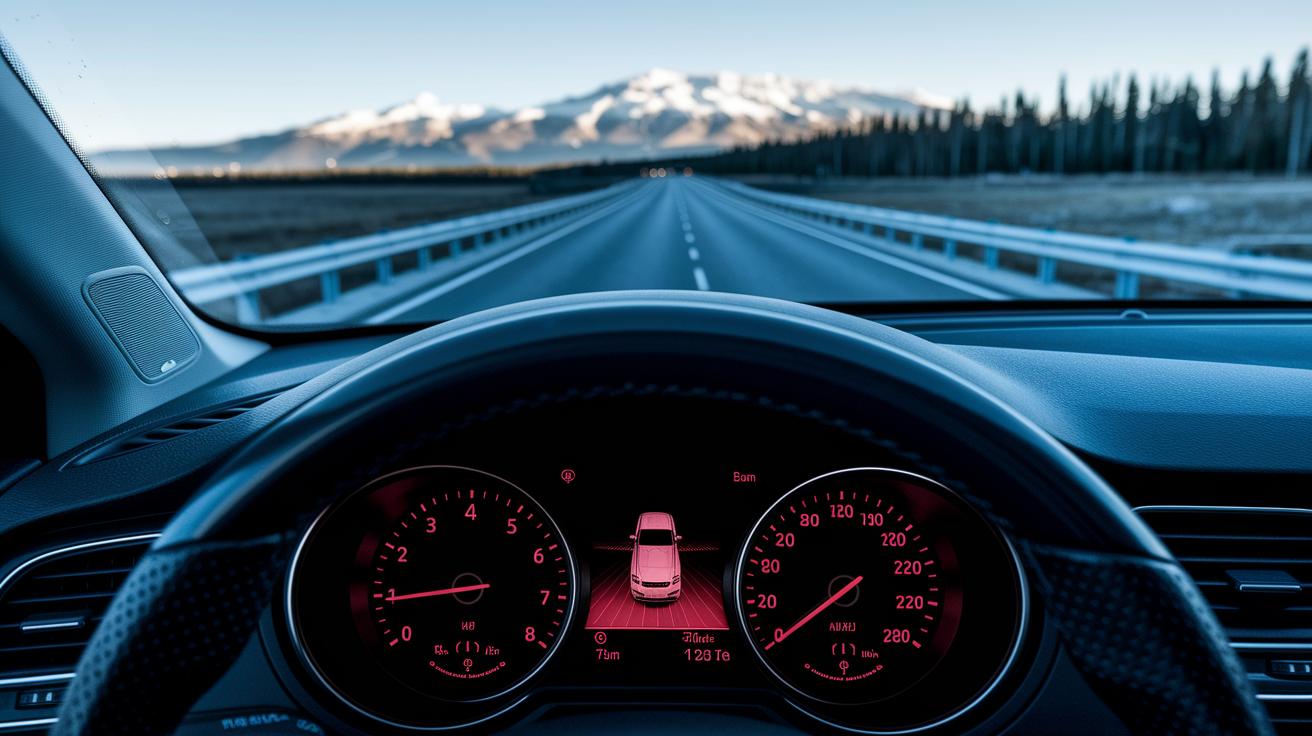
ADAS packs a smart mix of features that both watch out for you and help steer you clear of danger. It works by giving friendly warnings when something seems off and even stepping in when things get risky, like having a trusted buddy riding along.
- Adaptive Cruise Control (ACC)
- Automatic Emergency Braking (AEB)
- Lane-Keeping Assist (LKA)
- Lane Centering (LC)
- Pedestrian Collision Avoidance Mitigation (PCAM)
- Blind Spot Monitoring
- Adaptive Headlights
Each of these functions plays a special part. For example, adaptive cruise control adjusts your speed automatically to keep a safe distance from the car ahead, almost like a gentle reminder to stay alert. In the same way, lane-keeping assist and lane centering offer a light steering touch to help you remain in your lane. Meanwhile, blind spot monitoring uses cues like lights and sounds to alert you when there’s hidden danger, making sure you stay aware. And if things take an unexpected turn, automatic emergency braking helps slow or stop your car to avoid a collision.
Together, these features create a balanced system that supports you on every drive, blending soft alerts with ready-to-act measures so you feel secure and confident every mile of your journey.
Active vs Passive ADAS Systems: A Functional Comparison

Passive ADAS systems gently keep you alert by using sounds, flashing lights, or even a slight buzz in the steering wheel. It’s like a friendly tap on the shoulder that reminds you to check your mirrors before a lane change. These systems let you stay in control, while giving you a helpful nudge when things seem a bit off.
Active ADAS systems, on the other hand, step in to help out directly. They might apply light braking or adjust the steering on their own to guide you safely along your route. Imagine having an extra pair of hands in tricky moments, it’s a bit like that.
When you compare the two methods, here’s what to keep in mind:
- Passive ADAS systems give clear warnings while keeping the driving experience firmly in your hands. However, they depend on you noticing and reacting quickly.
- Active ADAS systems jump into action to help prevent mishaps by reducing human error. But sometimes, they might take over in situations where you’d prefer to manage things yourself.
Impact of ADAS Technology on Safety Outcomes

ADAS systems are doing an amazing job keeping drivers safe by helping avoid collisions. They deliver real-world results that you can actually see. Take blind spot detection, for example, it handles nearly 78% of lane-change accidents so that every turn feels a little safer. And when it comes to Forward Collision Warning (a system that alerts you when you’re too close to something ahead), it can lower rear-end crashes by anywhere from 9% to 53% while reducing injuries by 19% to 60%. Together, these features create a safety net that quickly notifies drivers and even steps in when hazards pop up.
People are really embracing these smart features too. A survey conducted in 2022 showed that 69% of drivers value backup cameras, 64% appreciate blind spot warnings, and 63% are happy with adaptive cruise control. But ADAS isn’t just about crash prevention; it also helps take care of your vehicle. By keeping an eye on tire pressure, fuel levels, and engine status, the system alerts you early through cloud computing (a way to store and share information online) so that you can fix small issues before they turn into big, expensive problems.
| Benefit | Statistic | Impact |
|---|---|---|
| Blind Spot Monitoring | Addresses nearly 78% of lane-change accidents | Safer turns |
| Forward Collision Warning | Reduces rear-end incidents by 9–53% and injuries by 19–60% | Enhanced road safety |
| Predictive Maintenance | Monitors tire pressure, fuel level, and engine status | Averts costly repairs |
| Backup Camera Usage | Valued by 69% of drivers | Easier and safer reversing |
Future Directions and Trends in ADAS Technology

Smart city systems are set to change how ADAS works by linking up vehicles with live data from their surroundings. Imagine your car chatting with traffic lights and road sensors, sharing quick updates about the best route or sudden hazards. It’s like your car becomes part of a friendly community, always connected and ready to keep you safe.
New tech is on the horizon too. For instance, the Mobileye Driver Monitoring System launches in July 2025 and the Mobileye Imaging Radar in May 2025. These tools are designed to boost driver awareness and even help when you take your eyes off the road (safely, of course). They give us a sneak peek at what many people call "future tech," making ADAS smarter and more reliable every day.
The journey from advanced driver assistance to full self-driving is slowly coming together. With steady improvements in AI for vehicles and smart sensor connections, the gap between assisted driving and complete autonomy is shrinking. Today’s safety features, like automatic corrections, are just the start. Real-world testing and support from a growing range of assistive technologies are building a future where driving is not only safer but truly smart.
Final Words
In the action, we explored how adas technology brings real change to driving safety. We covered its core sensor systems, how SoCs and ECUs work to process data, and the mix of passive alerts with active interventions that boost driver confidence.
Each section helped us see how modern, digital solutions are turning cars into smarter, safer machines. With adas technology paving the way, the future of safe driving looks bright and inspiring.
FAQ
What are ADAS technologies?
The term ADAS technologies refers to advanced driver assistance systems that use sensor networks (such as cameras, radar, and ultrasonic sensors) and computing power to help drivers avoid collisions and boost overall safety.
How does ADAS work?
The ADAS system works by gathering real-time data from sensors and processing it through onboard computers to alert drivers or even automatically adjust steering and braking for added safety.
What ADAS features are available in modern cars?
Modern cars with ADAS typically offer features like adaptive cruise control, lane-keeping assist, blind spot monitoring, automatic emergency braking, and pedestrian detection, all designed to enhance driver support and safety.
What are ADAS levels and what is ADAS Level 2?
ADAS levels classify how much a system assists the driver. Level 2 systems combine warnings with partial automated control (like steering and braking) while still requiring driver attention.
Which car has the highest ADAS level?
Cars with the highest ADAS levels often come from high-end brands that integrate advanced Level 2 systems. However, models update frequently, so checking current reviews or manufacturer details is best for the latest info.
Can I add ADAS to my car and does my car have ADAS?
Some ADAS features can be retrofitted, but many require specific hardware and systems built into the vehicle. It’s best to review your car’s specs or consult a professional to know what’s available.
What is ADAS technology stock?
ADAS technology stock refers to investments in companies that design and manufacture advanced driver assistance systems, representing a stake in the growing market of automotive safety innovations.
What are the types of ADAS?
The types of ADAS range from passive systems, which provide alerts, to active systems that automatically intervene with controls like braking or steering, offering varying levels of driver assistance and safety.