

Ever wonder how some companies zip ahead in our digital world? The secret is a clear digital roadmap plan. It links big ideas to everyday tasks, like fitting puzzle pieces together to reveal an exciting future.
This plan makes sure everyone, from the top boss to each team member, knows exactly what to do. We’ll walk you through setting up the plan, handling any changes, and keeping your progress steady. The result? A smooth, transformative journey for your business.
Digital Roadmap Project Plan: Essential Execution Framework
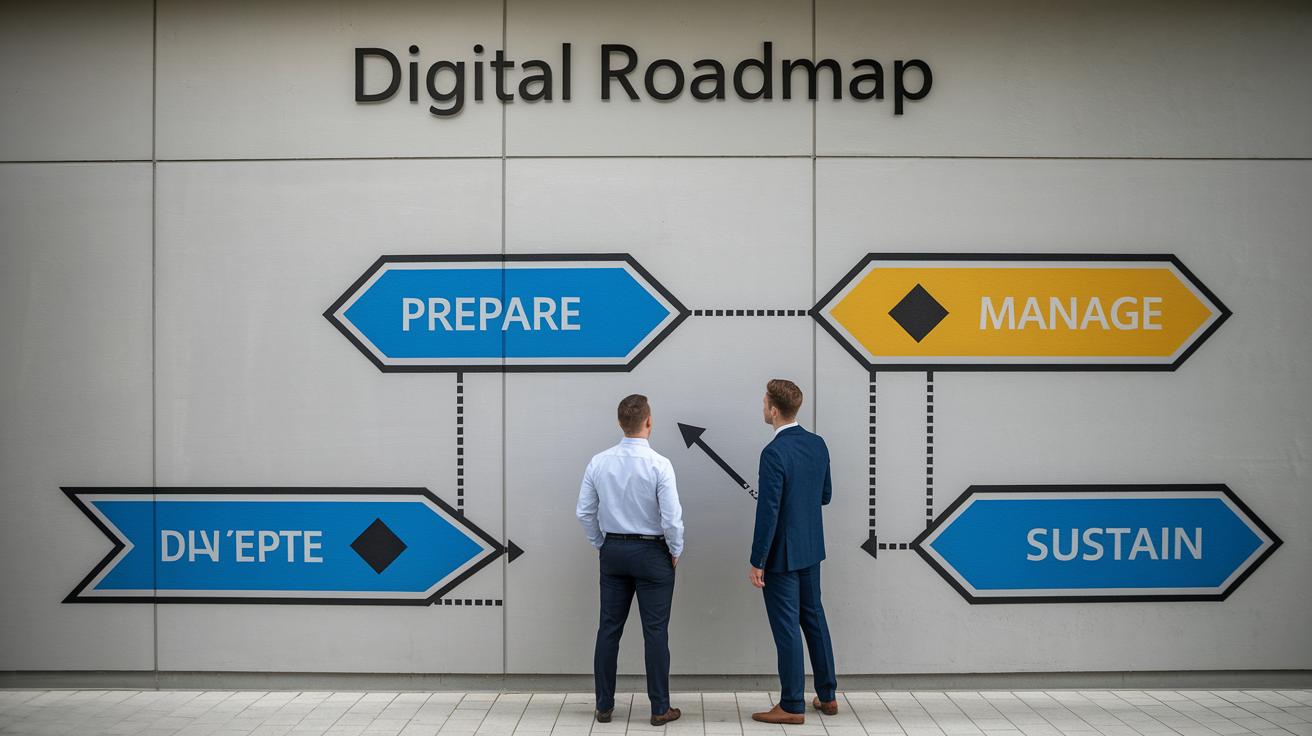
A digital transformation roadmap is a clear plan that connects your business goals with a timeline of projects. It assigns each task to specific people and sets clear measures of success so everyone, from the top executives to everyday team members, is on the same page. Think of it as the guiding map that brings together technology, people, and company culture to boost efficiency and engagement.
The plan follows a proven three-phase process. First up is the Prepare Approach phase. Here, you identify the main business goals and figure out which ones matter most. It’s like laying the first brick to build a secure digital house.
Next comes the Manage Change phase. This is where the work gets real. Teams start putting the plan into action with clear communication, helpful training sessions, and focused initiatives. Picture it like turning a key that sets all the digital gears in motion, making sure each group knows exactly what to do. Sometimes, it feels like a tap that unlocks not only your device but the whole system.
Lastly, the Sustain Outcomes phase makes sure that the changes stick around. New practices become part of daily work, and long-term responsibilities shift from the project team to everyday managers. Regular performance checks, including both technical stats and user feedback, help keep everything on track.
By linking strategy to everyday actions in these three steps, this digital roadmap turns big ideas into a plan that is clear, actionable, and ready to push your company into a bright new future.
Structuring Project Phases in Your Digital Roadmap Project Plan

Breaking your digital roadmap into clear, step-by-step parts makes everything easier to handle. First, decide what a win looks like, like planning to score a touchdown in a big game. Think of it as setting the score you need to win.
Next, take a close look at where you are now and where you want to go. Ask yourself, "Where am I now and where do I want to be?" It’s a bit like mapping out your team's positions on the field.
Then, choose how you’re going to bring about this change. This means picking out the methods and tools that will help you move forward, like choosing the perfect play for your team. After that, bundle together similar tasks into small projects that have clear steps and deadlines.
Now, keep an eye on your progress by checking in regularly, just like watching the score during a game. If things aren’t going as planned, take a moment to review the results and adjust your strategy.
Finally, make sure that the changes stick by passing the responsibility to someone who can keep the momentum going. It’s like handing over the winning play to the team captain who’ll make sure everything stays on track.
These steps build a solid plan for taking your IT strategy from an idea to real, lasting change.
Scheduling and Milestone Management in a Digital Roadmap Project Plan

When you design a schedule, you set a clear plan with built-in check-ups to see if everything's on track. Imagine a tracker that points out important milestones at 30, 60, and 90 days. For example, you might check in at 30 days to see if your tools are working well and if everything’s running smoothly. This way, you can quickly spot what’s working and notice where a little tweak might help.
With a milestone tracker, you know all your tasks, budgets, and resources match up nicely at each step of your digital plan. It's like setting up a smart timeline where every task keeps progress moving and stays clear for the whole team. You might even use tools like Gantt charts (a type of timeline chart) or simple trackers that show everyone what to expect. This approach gets people on board and makes it easy to see who’s handling each step.
When you tie regular check-ups to clear goals, you set up a plan where every idea gets measured against easy targets. It’s like glancing at your car’s dashboard, it gives quick updates and steady reassurance as you move ahead. A well-planned schedule also makes sharing resources simpler because every phase is backed by a timeline that cares about both the tech side and the human side of your project.
By setting up these checkpoints and tracking tools, you keep your digital roadmap on track. It turns a complicated digital overhaul into simple, clear tasks that you can tackle one step at a time.
Resource Allocation and Risk Management in a Digital Roadmap Project Plan

Clear-cut ownership and smart resource use form the foundation of any digital roadmap. By assigning tasks and setting budgets for each step, like putting aside money for software licenses, naming a project lead, or choosing the right digital tools, you can keep your plan running smoothly. For example, saying “Allocate $5,000 for initial testing, assign team lead Alex, and choose a strong tool for real-time monitoring” shows how thoughtful planning helps avoid delays.
Lots of projects stumble when they lean too much on technology and forget about the people behind it. You might face hurdles like missing leadership support or not properly preparing your team. Try these tips:
| Tip | What To Do |
|---|---|
| Tech & Training | Pair advanced tools with hands-on staff training. |
| Leadership Buy-In | Get leaders involved early to guide the project. |
| Employee Adoption | Organize regular training sessions and keep communication open. |
Using an agile approach, where you work in short cycles, helps catch risks early. You check progress regularly and adjust the plan when needed. Imagine it like quick pit stops during a long race: you ask, “Is this working, or should we change course?” This way, you can fix problems before they grow and keep each phase of your digital project flexible and on track.
Change Management and Stakeholder Engagement in a Digital Roadmap Project Plan

Getting everyone on board means mixing tech rollouts with a genuine focus on the people behind them. Picture a scenario where system launchings run hand in hand with personalized training sessions, clear messages, and active support from leaders. For example, your team could hold a live demo that not only unveils cool new features but also shows how these changes smooth out daily tasks, like upgrading from an old flip phone to a bright new smartphone.
A simple change management schedule keeps everything on track, while a clear stakeholder plan ensures everyone feels part of the journey. Start with a straightforward plan that spells out who’s doing what and when, maybe with regular check-ins so that everyone enjoys benefits right away. Inviting ideas from all levels helps build a plan that truly reflects what people need.
Tools like Prosci ADKAR (a method to boost awareness, desire, knowledge, ability, and reinforcement) can light the way. These guides turn worries into excitement and help set a shared goal. Think about saying in a team meeting, “Imagine a change where every employee feels ready and proud,” to encourage everyone to join in.
Finally, pass the long-term ownership from the project crew to daily leaders so the change becomes a natural part of everyday work. For more clear steps, check out the digital roadmap framework that offers an interactive approach to shaping lasting change.
Performance Measurement and Continuous Improvement in a Digital Roadmap Project Plan

Kick off your journey by setting up clear, simple targets from day one. Use easy-to-track numbers like tool usage rates and error drops, along with human feedback such as how happy users feel and if they’re sticking with your system. For example, you might say, “Before the update, 80% of users liked the interface; after the update, that number jumped by 15%.” This shows that every tweak really makes a difference.
Plan regular check-ins every 30, 60, and 90 days. These quick reviews help you see if you’re on track with your goals. It’s a bit like having routine pit stops on a road trip, ensuring you’re steering in the right direction.
Keep a simple log of what you learn during each review and be ready to make small changes as needed. Update your records and offer ongoing learning sessions so everyone stays in the loop. And don’t forget to cheer on those team members who drive change, they can really inspire others to join in.
You might also try digital maturity assessments (simple surveys to see how new ideas blend with your current workflow). For instance, right after a rollout, you could ask your team to rate the smoothness of the transition on a scale from 1 to 10. Use that feedback to tweak your process and keep your digital roadmap lively, responsive, and ready for a bright future.
Digital Roadmap Project Plan: Spark a Bold Future

Creating a digital roadmap to boost future growth is all about using simple tools, handy templates, and trusted tips. Start by tapping into specialized toolsets like ADONIS (for business process management), ADOIT (which maps out your company’s structure), and ADOGRC (handling governance, risk, and compliance). These tools keep your work organized and ensure every digital move is clear and well-measured.
Also, explore our broad range of support resources. You’ll find expert articles, easy step-by-step guides, engaging webinars, and dedicated libraries focused on business process management, enterprise architecture, and governance (ensuring you follow the rules). These materials break down tricky changes into simple steps, making the whole transformation feel much less daunting.
Remember, a quick 15-minute consultation can kick-start your project. It lines up tech support with your unique business needs, like a friendly and fast kickoff. Expert insights during this chat can help you plan your implementation using agile methods (a flexible way of working) to keep your project sharp and effective.
Use our templates, best practices, and resource tools to light the way toward a future that’s secure, smooth, and full of vision. When you put these tools and insights into play, strategic planning turns into a clear, effortless journey toward a safe and innovative digital future.
Final Words
In the action, we explored how a digital roadmap project plan guides organizations from strategy to execution. We broke down how to structure phases, manage schedules and milestones, allocate resources, and cover risk management, each step designed to make digital transformation clear and reachable.
We also looked at engaging change management and continuous improvement to keep progress on track. This approach not only simplifies your plan but also boosts confidence as you drive real, secure growth.