

Ever wonder if your online world is really safe? Think of data privacy laws like a strong lock on your front door that keeps your details secure. With more than 130 rules worldwide, companies must clearly explain how they use your information and ask for your permission first. From Europe’s GDPR (a set of privacy rules) to U.S. state laws, these rules work together to create a friendlier, safer internet. In this article, we’ll chat about how these measures help build trust and secure a brighter digital future for all of us.
Understanding the Global Landscape of Data Privacy Laws
Data privacy laws are rules that tell companies and governments how to handle your personal data. They help keep your information safe by setting clear guidelines. Think of them as digital locks protecting your sensitive details, just like a strong door keeps your home safe. For example, if a smartphone app asks for your location, the law makes sure you know why it’s needed and how it will be used.
Around the world, there are more than 130 data privacy laws, each with its own approach to protecting your information. Different countries and states have developed their own sets of guidelines, all aiming to keep data secure. From the European Union’s strict GDPR (General Data Protection Regulation, a robust privacy law) to various U.S. state rules, these laws work together to create a safer digital space. This means businesses operating in multiple regions need to understand and follow these different safeguards.
Most of these laws rest on a few core ideas. They require you to give clear consent before your data is used, only collect what is needed, and quickly notify you if there is a breach. For example, if a breach happens, companies must promptly inform you. You can learn more about these standards under data privacy protection here: data privacy protection. These shared guidelines help companies avoid fines, lawsuits, or other problems when they don’t follow the rules.
Key U.S. Federal Data Privacy Laws

The Privacy Act of 1974 is all about giving you control over your own info. It stops federal agencies from sharing your personal records without your written permission and lets you view or update your details. Think of it as the first step toward keeping your data safe.
HIPAA came along in 1996 to set national rules for protecting patient health records. It covers doctors, hospitals, insurers, and others so that your health information stays private and secure.
The Gramm-Leach-Bliley Act of 1998 makes sure banks and other financial institutions guard your data carefully. It also requires clear privacy notices so you always know how your information is being handled.
COPPA, also introduced in 1998, protects children under 13 by requiring companies to get parental consent before gathering any data from them. It also insists companies be upfront about their data practices, especially when it comes to our youngest users.
Federal oversight of these laws means that various agencies work together. State attorneys general and special regulatory groups keep an eye on things, they make sure rules are followed, hand out penalties when needed, and work to keep our data safe across different industries.
Comparing State-Level Data Privacy Laws in the U.S.
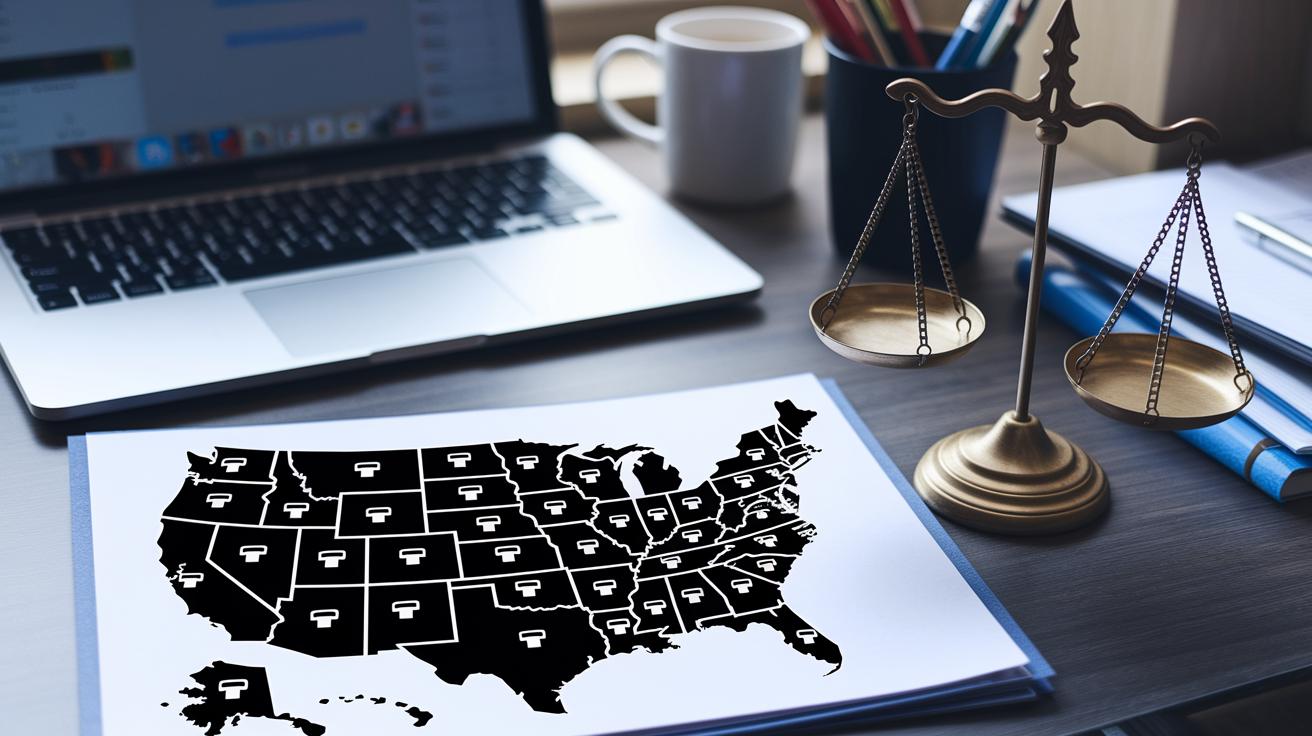
Privacy rules for each state have turned into a mix of different laws that change a lot from one place to another. Many states, you know, like California, Virginia, Colorado, and Connecticut, have made their own privacy acts. These laws build on earlier rules, like the CCPA from 2018. For example, the California Privacy Rights Act (CPRA, which strengthens how your data is protected) started on January 1, 2023. Then you have states like Montana, Oregon, Texas, Iowa, Tennessee, and Indiana, each with its own start dates and special rules. Plus, Delaware, Maryland, and Rhode Island have added more laws that make things a bit more complicated. It’s important for businesses to keep up with these changes.
| State | Law | Effective Date |
|---|---|---|
| CA | CPRA | 1/1/2023 |
| VA | CDPA | 1/1/2023 |
| CO | CPA | 7/1/2023 |
| CT | DPA | 7/1/2023 |
| MT | MTCDPA | 10/1/2024 |
| OR | OCPA | 7/1/2024 |
| TX | TDPSA | 6/18/2023 |
| IA | ICDPA | 1/1/2025 |
| TN | TIPA | 7/1/2025 |
| IN | INCDPA | 1/1/2026 |
These rules show clear differences from state to state, not only on when they start but also on how they are enforced. Each law explains how companies should collect, use, and share personal data. The penalties can be very different too, from fines to limits on how a business can operate. State attorneys general (the top legal officers in a state) help make sure these laws are followed. Because of all these differences, companies need to adjust how they follow the rules so they protect consumer privacy in both spirit and practice.
International Data Privacy Frameworks Beyond the U.S.

Countries around the world have set up rules that help personal data travel safely, no matter where it goes. These rules are put in place to keep our information secure and to deal with new gadgets and ideas. It’s kind of like building bridges with shared rules that help protect your favorite online shop.
The EU’s General Data Protection Regulation, or GDPR (a set of rules protecting your private info), is one of the best-known frameworks. It makes sure companies ask you directly before they take any personal data. And if there’s a problem, they have to let you know within 72 hours. If they mess up, they can be hit with fines as high as €20 million or 4% of their yearly global earnings. Picture the careful steps you take when unlocking a secure app, GDPR asks companies to be just as careful with your data.
Meanwhile, there are other important rules like the Digital Services Act and the Digital Markets Act. The Digital Services Act helps online platforms handle harmful content responsibly, while the Digital Markets Act makes sure big tech players are playing fair. On top of that, the EU–U.S. Data Privacy Framework creates a safe route for data to move back and forth across the Atlantic, keeping solid protections in place.
More recently, the EU AI Act came into the picture in mid-2023. It aims to set clear guidelines for high-risk artificial intelligence (a type of computer program that can learn and make decisions) used in places like hospitals, banks, and workplaces. This law is expected to guide how AI is used, making sure that as we push forward with new technology, our privacy stays safe.
Evolution and Timeline of U.S. Data Privacy Legislation

We've seen U.S. privacy laws change over the years, driven by rising digital threats, rapid tech changes, and shifting consumer expectations. Remember when a simple password was enough? Now, every login needs an extra layer of security, showing why businesses must keep updating their protections.
Back in the 1970s, laws like the Privacy Act set the stage by safeguarding government records. In the '90s, rules such as HIPAA, GLBA, and COPPA stepped in to protect health, finances, and even young users. Then came the 2010s, where new tech and online commerce spurred states to enforce stricter rules, similar to the CCPA and CPRA. Think of it like adding extra floors to a building, each decade strengthening our shield of accountability.
Today, this patchwork of laws reflects how our digital world constantly evolves. Companies now juggle diverse legal rules while still trying to innovate. And honestly, as rules keep pace with technology, businesses must adapt fast to stay compliant and keep their customers' trust.
Enforcement and Penalties Under Data Privacy Laws

Key enforcement bodies like the European Union’s Data Protection Authorities (DPAs) and U.S. state attorneys general are the friendly watchdogs of our privacy rules. DPAs keep an eye on companies, conduct investigations, and hand out penalty notices if personal data isn’t kept safe. In the U.S., state attorneys general step in by launching civil actions to ensure companies follow proper legal steps. They work hard to protect our personal details while making sure companies own up to any mistakes.
The GDPR sets a high bar with really steep penalties compared to many U.S. laws. Fines under GDPR can reach up to €20 million or 4% of a company’s global turnover – whichever number is bigger. On the other hand, U.S. laws usually involve civil penalties and might even spark class-action lawsuits if companies don’t meet privacy standards. While fines vary from state to state, the overall aim is to use focused fines and swift actions to fix any issues.
Companies also face big legal risks and operational challenges if they don’t follow breach notification rules. Both U.S. and EU regulators insist that businesses promptly alert affected individuals and the right authorities when a data breach occurs. This quick reporting isn’t just a box to check, it’s a key part of keeping consumer trust strong. When breaches lead to bad press or long legal battles, the resulting fines and limits on operations can really disrupt the way a business runs.
Business Impacts and Compliance Strategies for Data Privacy Laws

Modern companies face a variety of privacy rules. Businesses in tech, healthcare, finance, and retail all tackle different challenges when it comes to keeping data safe. They need to balance fresh, innovative ideas with solid safeguards (like locks that protect a safe). Some follow very specific industry rules while others stick with broad guidelines. In truth, every company has to adjust its approach to meet these ever-changing rules.
Legal experts and outside advisers are key in this tricky field. Many firms turn to groups that specialize in cybersecurity and privacy (teams that help secure your data) for advice on costs and best practices. These professionals assess risks, explain new standards, and suggest steps that fit each business perfectly. One adviser even put it this way: “Think of compliance as both a shield and a bridge to trust.” By breaking down complex laws into simple actions, they make privacy rules feel much more doable.
Modern tech tools are reshaping how companies handle privacy tasks. More businesses now use consent-management systems that work in over 50 countries. These systems automatically take care of DSAR workflows (requests for personal data) and help sort and classify data efficiently. By ditching older methods, companies can cut down on mistakes and better protect customer information. In a nutshell, automation makes sticking to strict rules a whole lot simpler.
Regular privacy checks, careful data minimization (keeping only what you need), and using template-based privacy programs are smart practices to follow. These steps help spot weak areas quickly, so companies can update their policies on the fly. Not only do these actions keep businesses compliant, they also boost customer trust by showing a real commitment to future security. Sometimes, a routine audit even uncovers hidden gaps that can be fixed right away.
data privacy laws: Empowering secure futures

In the coming years, our digital world is set to transform with fresh privacy laws. For example, twelve state laws will kick in by 2026, each laying out clear rules on how we can collect, use, and share personal info. And around 2025-2026, the EU AI Act (a law to manage high-risk AI systems in healthcare, finance, and jobs) will tighten control over these advanced technologies. It’s like adding an extra smart lock, every new rule builds on your digital safety.
Globally, over 130 privacy laws are already in play, and there’s lively debate on managing AI, smart devices (Internet of Things), and data moving across borders. These trends show that our digital interactions are constantly getting improved, much like regular software updates protect against new threats. Companies will need to stay nimble, keeping up with these changes, just as you’d update an app to stay secure. Ultimately, this isn’t just about extra rules, it’s about laying the groundwork for a safer future for everyone.
Final Words
In the action of exploring how over 130 data privacy laws shape our world, we saw how nations and states build frameworks around consent and breach notifications. We dove into U.S. federal rules, state-level nuances, international frameworks like GDPR and even emerging trends that push boundaries. We also talked about business impacts and the practical steps to manage data securely. With data privacy laws guiding the way, the future of digital transformation remains bright and secure. Keep embracing innovations that balance protection with progress.
FAQ
What are the different types of data privacy laws worldwide?
The different types of data privacy laws worldwide include national, state-level, consumer-focused, and global frameworks that govern how personal data is collected, used, and protected across various regions.
What does GDPR entail and what are its key principles?
The GDPR entails strict consent, data minimization, right to access, and breach notification rules. Though often summarized by several core principles, it doesn’t officially list exactly seven laws.
What are the main U.S. federal data privacy laws?
The main U.S. federal data privacy laws include the Privacy Act of 1974, HIPAA (1996), GLBA (1998), and COPPA (1998), each protecting personal information in different sectors.
How many states in the U.S. have data privacy and breach laws?
The number of U.S. states with data privacy and breach laws varies, with many having established such measures, though not every state currently enforces comprehensive breach laws.
What are the three rights under the U.S. Privacy Act?
The three rights under the U.S. Privacy Act grant individuals the right to access their records, correct inaccuracies, and request amendments to ensure their personal data remains accurate and secure.